Choosing a Car Audio Technician: What to Check Before You Hire

Last Updated: November 14, 2026
Quick Summary
A car audio technician installs, wires, tunes and troubleshoots sound systems inside vehicles, going well beyond simply mounting speakers. When hiring one, check specific certifications like MECP held by the person working on your car, experience with your vehicle type, insurance coverage, and a clear workmanship warranty. Ask for an itemized quote that separates equipment, labor, materials and tuning.
- Ask which specific programs the individual working on your car has completed, and ask to see the credential.
- Confirm the shop carries general liability coverage and ask what happens if a panel is damaged.
- Ask whether the workmanship warranty is separate from the manufacturer's parts warranty.
- Request a quote that itemizes equipment, labor by stage, materials and tuning.
- Confirm that factory features like steering wheel controls and backup cameras will keep working after installation.
Table of Contents
- What a Car Audio Technician Actually Does
- Qualifications to Look For: Certification, Experience and Training
- Good, Better, Best: Matching Components to Your Listening and Your Vehicle
- Installation Quality: Wiring, Integration and Keeping Factory Features Working
- Comparing Costs: What Is Included in an Itemized Quote
- Mobile, Shop-Based and DIY Installation Compared
- Finding Car Audio Installation Near You and Booking Your Consultation
- Frequently Asked Questions
What a Car Audio Technician Actually Does
A car audio technician installs, wires, tunes and troubleshoots sound systems inside vehicles. The job goes well beyond bolting a speaker into a door panel. A good technician reads the vehicle's electrical layout, chooses components that match the owner's listening habits, and makes sure the new system does not disable anything the factory already provided.
Planning means matching the head unit, speakers, amplifier and subwoofer to the vehicle and the way the owner actually drives and listens. Installation covers mounting, wiring and integration. Tuning sets levels, crossovers and, on more advanced systems, digital signal processing so the system sounds balanced in the real cabin.
Technicians also handle the parts people rarely think about: power and ground routing, fuse placement, custom enclosures and the cleanup of trim and panels afterward. Those steps determine whether a system is reliable a year later.
Qualifications to Look For: Certification, Experience and Training
Most shoppers ask whether a technician is "certified" and stop there. That single question misses the point. Certification, experience, insurance and documentation each answer a different concern, and a shop can be strong on one and weak on another. Use the checklist below to evaluate any technician or shop before you hand over the keys.
Certification and training. Ask which specific programs the technicians have completed, not whether the shop is "certified" in general. Common credentials in this trade include Mobile Electronics Certified Professional (MECP) certification, which tests installation knowledge and electrical fundamentals. Ask whether the individual who will work on your vehicle holds the credential personally, and ask to see it. A certificate framed in the lobby does not always belong to the person assigned to your car.
Experience with your vehicle type. Years in business matter less than the mix of vehicles a shop sees. Ask how many installations the shop completes in a typical month and whether it has worked on your year, make and model. A good technician will tell you plainly when a platform is unfamiliar.
Insurance and licensing. Confirm the shop carries general liability coverage and, where required, workers' compensation. Ask what happens if a panel is scratched or a factory module is damaged during the work. A shop that cannot answer clearly is a shop that has not thought about it.
Reviews and references. Read recent reviews on Google and look for patterns rather than single complaints. Ask for references from customers with vehicles similar to yours.
Warranty and documentation. Ask what the workmanship warranty covers, how long it runs, and whether it is separate from the manufacturer's parts warranty. Ask whether you will receive documentation of the wiring, the interface modules used and any settings applied during tuning. That paperwork matters if you sell the vehicle or need service later.
Authorized dealer status. A shop that is an authorized dealer for the brands it recommends has direct access to technical support and current integration data. Ask which lines the shop is authorized to sell and install. Our team has operated for more than 15 years and is an authorized dealer for the equipment lines we install. You can review our shop history and authorized brands before deciding.
Watch out: a low quote paired with vague answers about insurance, warranty or documentation usually signals shortcuts that surface months later, often as electrical noise, failed interfaces or trim that never sits right again.
Good, Better, Best: Matching Components to Your Listening and Your Vehicle
Most customers do better with a clear tier structure than with a long list of parts. We organize recommendations as Good, Better and Best, and each tier reflects a different balance of budget, sound quality and vehicle compatibility. For a concrete example of how these tiers play out for a specific vehicle type, read our sports car audio setup guide.
- Good: A reliable head unit and component speakers that improve clarity over factory audio. This tier suits commuters who want noticeably better sound without a major build.
- Better: Upgraded speakers, a compact amplifier and a subwoofer matched to the vehicle's interior.
- Best: A full system with a multi-channel amplifier, processing and a custom enclosure. This tier fits owners who want accuracy and volume headroom and are willing to invest in careful tuning.
The right tier depends on how the car is used. A sedan driven mostly on freeways needs different components than a sport truck used for weekend events.
Here is how the three recommendation tiers compare at a glance.
| Tier | Best for | Key difference |
|---|---|---|
| Good | Commuters wanting clearer sound | Reliable head unit and component speakers |
| Better | Owners wanting more bass and presence | Upgraded speakers, compact amplifier and subwoofer |
| Best | Owners seeking accuracy and headroom | Multi-channel amplifier, processing and custom enclosure |
Installation Quality: Wiring, Integration and Keeping Factory Features Working
Wiring is where installations succeed or fail. Clean, correctly gauged power and ground connections prevent noise, dim lights and blown fuses. Ask the technician how they route wiring, whether they use the correct harnesses and whether they keep factory features such as backup cameras, steering wheel controls and warning chimes working.
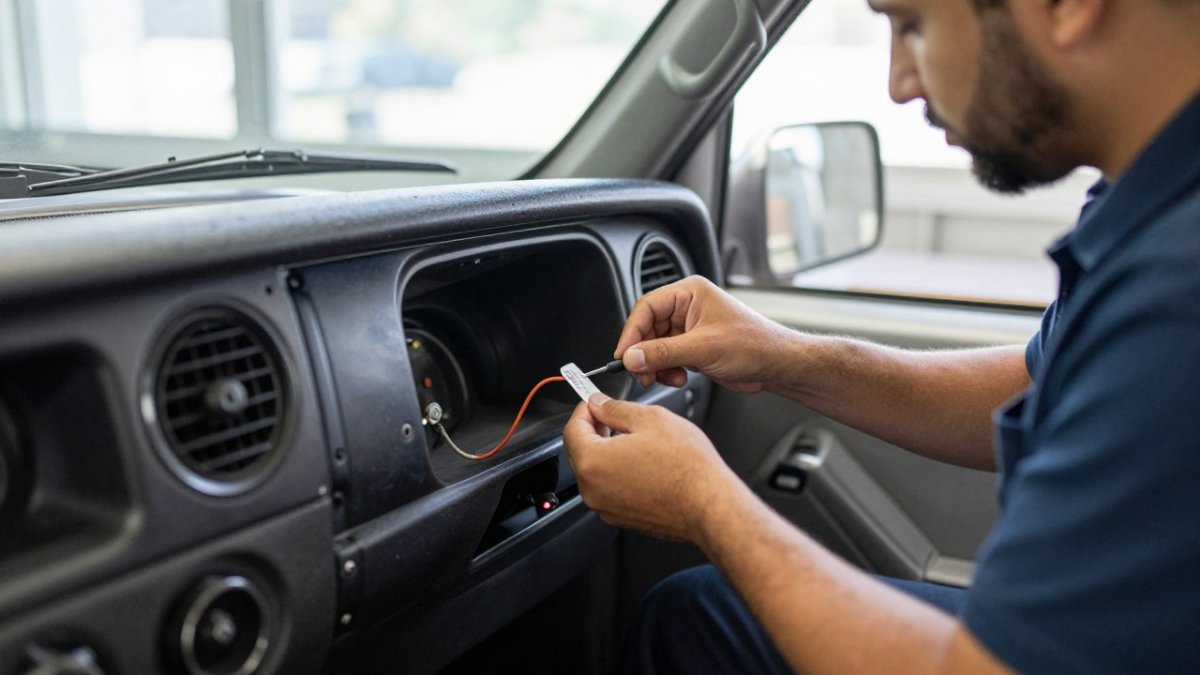
Integration is the common pain point. Many owners worry that a new head unit will break steering wheel controls or disable a backup camera. A technician who knows the vehicle's architecture can use the right interface modules to preserve those functions. Confirm this before the work begins.
A useful check after installation is whether the rest of the car still works as it did before. Look for intact trim, secure panels and features that behave normally.
Comparing Costs: What Is Included in an Itemized Quote
Cost depends on the vehicle, the components chosen and the amount of custom work involved. What we can give you is a clear framework for reading any quote, including ours, so you can compare proposals on equal terms.
A fair itemized quote separates four things: equipment, labor, materials and tuning. When those are bundled into one lump sum, you cannot tell whether you are paying for better parts or for more hours.
Equipment. Each component should be listed by brand and model, with the quantity. Ask whether the price includes the harness, interface modules and mounting adapters needed for your specific vehicle, or whether those appear later as add-ons. On modern vehicles, interface modules that preserve steering-wheel controls, backup cameras and warning chimes are frequently a meaningful line item on their own.
Labor by stage. Installation labor is not one task. A detailed quote breaks it into removal and disassembly, wiring and power routing, mounting, reassembly and testing. Custom enclosure fabrication and sound-deadening are separate labor categories because they take far more time than a speaker swap. Ask how many hours each stage is expected to take and what the shop's hourly rate is.
Materials. Wiring kits, fuse holders, sound-deadening material, enclosure materials and trim adapters should each appear as a line. These are the items most often hidden inside a vague labor charge.
Tuning and final testing. DSP tuning, crossover setting, gain matching and a final listening check take real time. Ask whether tuning is included or billed separately, and how many tuning hours the quote assumes. A system with processing that is installed but never tuned will not deliver what the equipment is capable of.
Warranty terms. Confirm whether the warranty covers parts, workmanship or both, how long each runs, and what voids it. Workmanship coverage is the part most shoppers forget to ask about.
What drives the number up or down. Vehicle complexity is the largest variable. A straightforward speaker swap in an older vehicle takes far less time than a full system in a modern car with integrated factory electronics, amplified factory audio or a fiber-optic data bus. Custom fabrication, sound-deadening and multi-amplifier layouts add labor. Equipment tier is the other major driver, which is why we organize recommendations as Good, Better and Best rather than quoting a single package.
Questions that expose a padded or thin quote. Ask what happens if the job takes longer than estimated, whether the quote is a fixed price or an estimate, and whether unused materials are credited back. Ask for the quote in writing with the line items above. A shop that resists itemizing is telling you something.
For current pricing on your vehicle and goals, contact us directly.
Mobile, Shop-Based and DIY Installation Compared
Installation generally takes one of three forms, and each suits different owners.
- Shop-based installation: The vehicle stays at a fixed workshop with access to fabrication tools, diagnostic equipment and a stock of components. This is usually the best choice for complex builds, custom enclosures and vehicles with integrated factory systems.
- Mobile installation: A technician comes to you. This fits simple swaps or owners who cannot leave the vehicle, but it limits the tools available for detailed fabrication and tuning.
- DIY installation: Owners who handle the work themselves save on labor but take on the risk of wiring mistakes, damaged trim and voided warranties on factory components. DIY makes most sense for simple speaker swaps on vehicles with straightforward electronics.
For most owners with a modern vehicle, a shop-based installation gives the most consistent result, especially when the goal includes keeping factory features intact.
Finding Car Audio Installation Near You and Booking Your Consultation
If you are searching for a car audio technician in Huntington Beach or across Orange County, start with a consultation. A good shop will ask about your vehicle, your listening habits and your budget before recommending any equipment. At HB Auto Sound OC, that consultation is where we match components to your car and your taste. Browse our installation services to see what we offer before you book.
You can contact HB Auto Sound OC through our website to request a car audio quote. Bring your vehicle's year, make and model, and tell us what you want the system to do, and we will put together a recommendation that fits.
Frequently Asked Questions
How much does it cost to get car audio fixed?
Costs depend on the problem, the vehicle and the parts involved, so there is no single flat rate. The most reliable way to compare is to ask for an itemized quote that lists diagnosis, labor and each component separately. For current pricing on your specific vehicle, contact HB Auto Sound OC directly for a quote.
What should I look for when choosing a car audio technician?
Start with verifiable credentials, such as MECP certification, and ask how long the technician has worked on your type of vehicle. Look for clean, labeled wiring work and a clear explanation of how the installer will handle steering wheel controls, backup cameras and other integrated features. Ask what the installation warranty covers and who handles follow-up if a problem appears later. A good installer will also recommend components based on how you listen and how you drive, not only on what sells best.
Is professional car stereo installation worth it?
For most vehicles, yes, especially those with factory-integrated systems. Professional installers route power and signal wiring correctly, which prevents rattles, noise and blown fuses, and they can keep steering wheel controls and camera inputs working after the upgrade. Doing the job yourself can save labor costs, but mistakes in wiring or integration often cost more to correct than the original installation would have.
How do I know a car audio installation will be done right?
Ask the installer to explain the wiring plan, the grounding method and how the new head unit will interface with your existing vehicle features before any work begins. Confirm that the shop stands behind its workmanship and ask what happens if an electrical issue appears after the job. Reviewing customer feedback and asking for references can also help you judge consistency over time.

Ready to Upgrade Your Ride?
Call us at (714) 842-1250 or visit us at 16732 Beach Blvd Ste A, Huntington Beach.
Get a Free Quote