
Truck Immobilizer Installation Guide for a Safer Rig
Last Updated: November 15, 2026
Quick Summary
A truck immobilizer installation cuts the starter circuit so the engine will not crank unless the correct key or code is read. Disconnect the negative battery terminal, confirm the starter wire with a multimeter, then wire the relay coil to the immobilizer output and its contacts in series with the starter wire. Solder every joint and test the system armed and disarmed before the trim goes back on.
- A truck immobilizer cuts the starter circuit; an alarm only makes noise.
- Passive systems arm themselves, while active systems need a fob button or code.
- Use a digital multimeter, not a test light, to identify the starter wire.
- Wire the relay coil to the immobilizer output and contacts in series with the starter wire.
- Late-model Ford trucks may need a bypass module to keep the factory key chip happy.
Table of Contents
- What a Truck Immobilizer Does and Why It Matters
- Choosing an Aftermarket Immobilizer System for Your Truck
- Tools, Parts, and Prep Before You Touch a Wire
- Step-by-Step Truck Immobilizer Installation
- Ford Truck Immobilizer Installation Guide: What Changes
- Samsara Engine Immobilizer Installation for Fleet Trucks
- Testing, Troubleshooting, and Post-Install Validation
- When to Search for Immobilizer Installation Near Me
- Frequently Asked Questions
What a Truck Immobilizer Does and Why It Matters
A truck immobilizer is an electronic security device that cuts the starter circuit unless it reads the correct key or code. It stops a thief from driving off even if they get the doors open. At HB Auto Sound OC, we install these systems because a truck often carries valuable tools and equipment.
Here is the key difference from an alarm. An alarm makes noise. An immobilizer makes the truck undriveable.
Most factory systems already include an engine immobilizer. The problem is the aftermarket layer. Thieves know the factory patterns. A second, hidden layer of protection changes the math.
Passive vs. Active Systems
Passive systems arm themselves. You walk away, the system sets, and the starter circuit locks without you doing anything. Active systems need input, like a fob button or a code.
Passive wins for daily drivers. You cannot forget to arm it. Active systems suit fleet trucks where you want a visible driver step before every start.
Choosing an Aftermarket Immobilizer System for Your Truck
Picking the right aftermarket immobilizer system comes down to three things: how your truck starts, how you use it, and how much you want to spend on the install itself. A work truck and a weekend tow rig have different needs.
- Starter-kill only: simplest setup, blocks the starter solenoid
- Starter plus ignition kill: blocks two circuits, harder to bypass
- Transponder-based: reads a programmed key or chip before start
- GPS-linked: pairs the kill with a vehicle tracker
Match the system to the truck's job. For more on comparing alarm and immobilizer options, see our guide on how to choose the best car alarm for a truck. A diesel that sits in a lot all week may suit a passive kill plus a tracker. A daily driver generally suits a clean passive system that does not trip on its own.
Factory Alarm Compatibility
Factory alarm compatibility is where installs go wrong. Modern trucks run data bus wiring, and tapping the wrong wire can set off warning chimes or disable remote start.
Check three things before you buy:
- Does the system support your truck's model year?
- Does it keep remote start working?
- Does it need a bypass module for the factory key chip?
If you are unsure, ask before you cut anything. Check compatibility first, then choose parts that fit the truck and the way you use it.
Tools, Parts, and Prep Before You Touch a Wire
Gather the full tool kit before you start. Stopping mid-job to hunt for a crimper is how wires get damaged.
Tools you need:
- Trim removal tools
- Digital multimeter
- Soldering iron and solder
- Heat-shrink tubing
- Wire strippers and crimpers
- Electrical tape
- Zip ties
Parts you need:
- The immobilizer system and its relay
- Vehicle-specific wiring harness
- Fuse tap or inline fuse
- Bypass module, if your truck needs one
- Ground ring terminals
Prep steps:
- Disconnect the vehicle battery before any wiring work
- Photograph the factory harness before you touch it
- Lay out the harness and label each wire
- Read the installation instructions twice
Watch out: skipping the battery disconnect can blow a fuse or damage the factory computer. That turns a simple job into a diagnostic bill.
Step-by-Step Truck Immobilizer Installation
The installation guide below covers a basic starter-kill system.
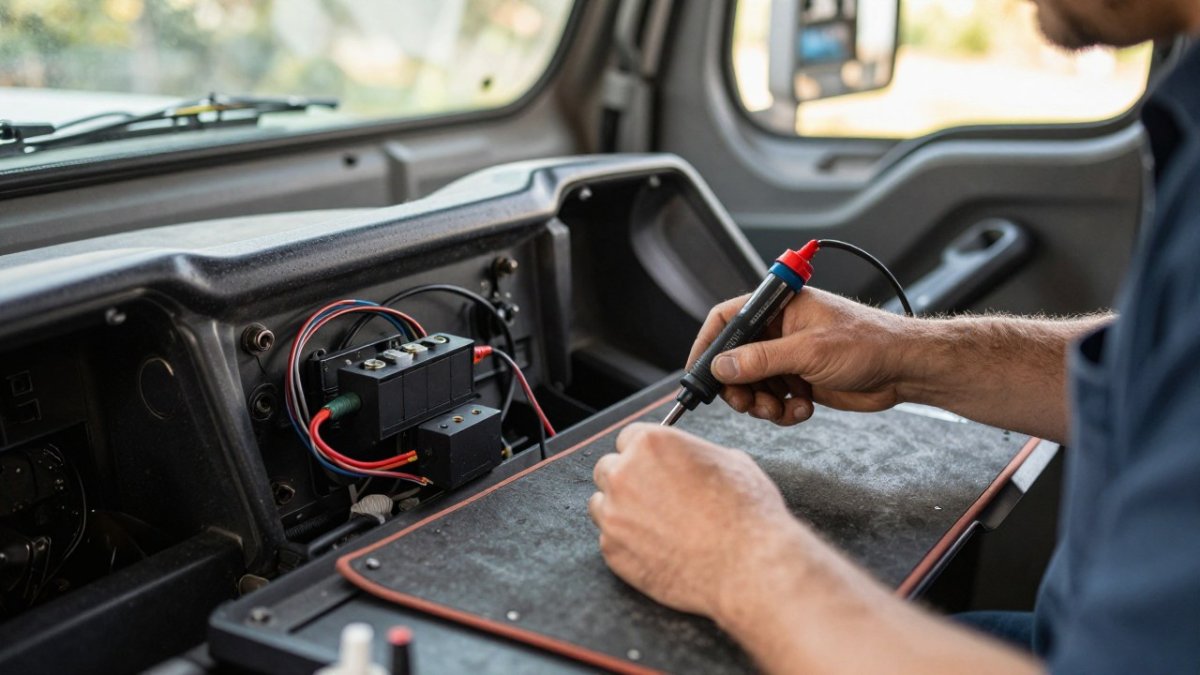
Step 1: Isolate the battery and stage the cab. Disconnect the negative battery terminal before any wiring work.
Step 2: Find the starter circuit. Use a digital multimeter, not a test light, to test the starter wire at the ignition harness.
Step 3: Pick the mounting location. Choose a spot behind the dashboard that is hidden from a seated driver but reachable for service.
Step 4: Run the harness. Route wires away from the steering column and pedals, and keep them clear of any airbag wiring.
Step 5: Make the connections. Solder every wire joint, then seal with heat-shrink.
Step 6: Wire the relay. The relay interrupts the starter circuit.
Step 7: Connect power and ground. Use an inline fuse on the power connection, sized to the system's specification.
Locating the Starter Circuit and Ignition Wires
The starter wire is the one that matters most. Test it, label it, and double-check it before you cut. On many trucks the ignition harness sits behind the steering wheel area or low in the dash, and the wire colors change by model year and trim.
Use a multimeter, not a test light, for this step. A test light can back-feed voltage into sensitive electronics. If you cannot confirm the wire, stop and check a vehicle-specific wiring diagram. Truck electrical architecture varies widely: older trucks often use a straightforward starter wire at the ignition switch, while newer trucks may route the crank request through a body control module or a powertrain control module, which changes where you can safely interrupt the circuit.
Relay Wiring and Circuit Interruption
The relay is the heart of the system. It sits between the starter wire and the starter solenoid, and it only closes when the immobilizer authorizes a start.
Wire the relay coil to the immobilizer output, then wire the contacts in series with the starter circuit. That is circuit interruption: no authorization, no crank. Solder the joints and seal them. A loose relay connection is the most common cause of a no-start after install.
Confirm the relay rating against your system's specification and the truck's circuit before you commit. If the truck uses a smart alternator or a complex body control module, plan the ground and power taps carefully so the immobilizer does not disturb factory monitoring.
Here is the basic starter-kill install sequence at a glance, from battery disconnect to pre-reassembly test.
| Step | What to do | Key detail |
|---|---|---|
| 1 | Isolate battery and stage cab | Disconnect negative terminal; photograph factory harness |
| 2 | Find the starter circuit | Multimeter only; wire reads voltage while cranking |
| 3 | Pick the mounting location | Hidden from driver, reachable, clear of airbag zone |
| 4 | Run the harness | Away from steering column, pedals, airbag wiring |
| 5 | Make the connections | Solder every joint, seal with heat-shrink |
| 6 | Wire the relay | Coil to immobilizer output, contacts in series with starter wire |
| 7 | Connect power and ground | Inline fuse on power; ground to bare chassis metal |
| 8 | Test before reassembly | Test armed and disarmed before trim goes back on |
Ford Truck Immobilizer Installation Guide: What Changes
Ford trucks change the job in a few specific ways. Many late-model F-Series trucks use a factory transponder key and a data bus that talks to the body control module. Cutting the starter wire alone may not be enough, and it may trigger a fault code.
What to plan for:
- A bypass module that keeps the factory key chip happy
- Careful testing around the ignition circuit so remote start still works
- Extra time to reach the harness behind the dashboard
For a Ford truck immobilizer installation, verify compatibility by model year and trim before you buy parts. The wiring is not the hard part. The compatibility is.
Samsara Engine Immobilizer Installation for Fleet Trucks
Fleet trucks need a different approach. A Samsara engine immobilizer installation ties the kill switch to a fleet platform, so a dispatcher can disable a truck remotely and see where it is.
That changes the install in three ways:
- The unit needs a stable power connection and a clean ground
- The wiring must not interfere with the factory immobilizer
- Every truck in the fleet needs the same procedure so results are consistent
For commercial trucks, plan the deployment in phases. Install on one truck, validate it for a week, then roll out. A fleet-wide install with one wiring mistake multiplies the downtime.
Testing, Troubleshooting, and Post-Install Validation
Testing is not optional.
Stage 1: Normal starting. With the system disarmed, start the truck several times.
Stage 2: Immobilized state. Arm the system and attempt a start. The engine should not crank.
Stage 3: Authorized operation. Disarm the system with the correct key, fob, or code and start the truck. Repeat several times to confirm the authorization reads reliably.
Stage 4: Factory feature check. If the truck has remote start, confirm it still works.
Stage 5: 24-hour soak. Leave the truck parked with the system armed overnight, then check for a blown fuse, a drained battery, or a warning light.
- Engine starts with the correct key or fob
- Engine will not crank when the system is armed
- Remote start still works, if equipped
- No warning lights on the dash
- No blown fuses after 24 hours
- All wire joints are soldered and sealed
- Harness is secured and clear of moving parts
If the truck will not start, work in this order: relay connections first, then the ground, then the fuse, then the authorization reader.
Watch out: do not bypass the relay or jumper the starter circuit to "test" the system. If you hit electrical gremlins after the job, our guide on troubleshooting electrical issues after stereo installation walks through the same diagnostic order we use in the bay.
When to Search for Immobilizer Installation Near Me
Searching for immobilizer installation near me usually means one of two things: you want it done right the first time, or a DIY attempt has already failed. Both are good reasons to bring the truck in.
Professional installation matters more on high-end systems. A premium audio build and a security system share the same wiring paths. Sloppy work on one can ruin the other.
If you want to see what a clean install looks like, review our car audio and security installation services. Ready to book? Contact our shop for a free quote and a straight answer on what your truck needs.
Your truck protects your tools, your cargo, and your daily commute. A properly installed immobilizer makes sure it stays where you parked it.
Frequently Asked Questions
How long does truck immobilizer installation take?
Most aftermarket immobilizer installs on a truck take a few hours, but the exact time depends on the system and how accessible the starter and ignition wiring is. A simple relay-based circuit interruption is quicker than a full system tied into a factory alarm. Trucks with complex dash layouts or added accessories can take longer. A shop that has done your model before will usually finish faster and with cleaner results than a first-time DIY attempt.
Can an aftermarket immobilizer work with my factory alarm?
Yes, in most cases an aftermarket immobilizer system can run alongside a factory alarm. The two systems handle different jobs: the factory alarm sounds when a door or window is forced, while the immobilizer cuts the starter or ignition circuit so the engine will not start. The key is proper wiring so the systems do not interfere with each other. A qualified installer will test both after the install to confirm nothing conflicts.
Do I need a professional for immobilizer installation near me?
You can install a basic relay-based immobilizer yourself if you are comfortable with vehicle wiring, soldering, and testing circuits. But if your truck has a factory alarm, a push-button start, or a diesel engine with different starting behavior, professional installation is the safer call. A pro will identify the correct vehicle-specific wiring, make clean solder joints, and validate that the truck starts reliably before you drive away.
Will installing an immobilizer affect my truck's warranty?
An aftermarket immobilizer can affect warranty coverage if a dealer ties an electrical fault back to the installation. Clean, reversible wiring and a system that does not cut into factory harnesses in a destructive way reduce that risk. Ask the installer how they connect to the vehicle and whether the work can be removed later. Keep your installation paperwork so you have a record if a warranty question ever comes up.

Ready to Upgrade Your Ride?
Call us at (714) 842-1250 or visit us at 16732 Beach Blvd Ste A, Huntington Beach.
Get a Free Quote